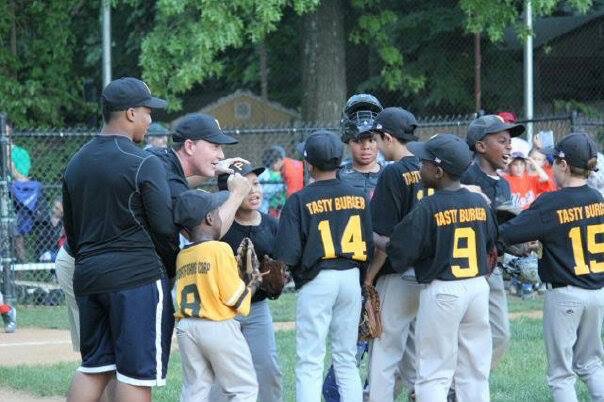
I have coached kids in Cambridge for a long time. Every team has players who struggle. I have coached kids with physical disability, aspergers and an array of mental health challenges. I have also coached kids who are just far behind athletically. I have coached kids who came in with private trainers and kids who came in never having played the sport before. Some arrived confident and loud. Others arrived quiet, unsure, and already carrying more weight than any kid should have to carry. Those are the kids who matter most to me, the ones who start behind.
Confidence is not always the biggest challenge. Understanding issues a child is facing at home or in school is key. I had a player in football that was so disruptive, I did not think he could remain part of the team. He was missing for a week and I got worried and went to his house. He lived in public housing and his mom did not speak English. His sister told me he could not keep food down and he had not eaten. I visited every day until I knew he was ok. When he came back his attitude was 100 percent different. He became my best player. Soon after, we went out to eat after a game and it was clear he had never experienced that before. He never acted out or missed a practice. I realize now that, like my high school coach who came to my apartment building door when I went missing, showing up at his house changed everything. I was no longer a screaming coach with a whistle but a human being who really cared.
The culture of every player matters
The first thing a coach has to understand is this. Starting behind is not a lack of effort or ability. It is usually a lack of opportunity. Players expect you to care most about the best player. When you show that every player matters you build a culture. When everyone tries to support the players that need it most, you build a winning culture.
Some kids do not have access to year-round sports. Some do not have parents who can practice with them. Some are dealing with stress at home that makes it hard to focus. When those kids struggle early, they often assume the problem is them.
As a coach, your job is to change that story. You make it clear that everyone starts somewhere and that progress matters more than comparison. When kids stop seeing themselves as broken, they become teachable.
Create a safe supportive environment
Confidence cannot grow in a place that feels unsafe. I authored one of the state’s first anti-bullying laws and believe teams must be a safe space where we all can be vulnerable. Safety means both physical and emotional.
Kids who start behind or are different are often afraid of embarrassment. Teams must be a safe space for all.
I set the tone early. Mistakes are expected. Effort is required. Disrespect is not allowed. When kids know they will not be shamed for trying, they start to take risks. That is where confidence begins.
Break the Game Into Small Wins
Big goals are overwhelming when you are already behind. That is why small wins matter so much.Kid need to understand why you’re teaching a certain way. Don’t do something is better served by a substitute action that is affirmative. Call out every small improvement.
The same applies off the field. Show up on time. Finish a drill. Help a teammate. These moments count. Don’t be afraid to tell kids when they make you proud, and when you are disappointed. That is often best delivered one on one. Confidence is built by stacking small successes until the kid can no longer deny their own growth.
Discipline Is a Gift, Not a Punishment
Kids from unstable environments often crave structure even if they resist it at first. Discipline, when done right, is a form of care.Some are used to chaos other constant structure or even over done planning and scheduling.
Clear rules. Consistent expectations. Fair consequences. These things create predictability. Predictability reduces anxiety. Reduced anxiety allows kids to focus and learn.
I do not yell to get discipline. Build trust first. Build real relationships on and off the field. Explain why you coach in an ascertain way and why you expect certain techniques. Allow feedback but make it clear you have the last word. I repeat. I reinforce. I stay consistent. Call out success and improvement. Reminding them as long as they are in your care, respect and supporting one another is more important than winning but one will follow the other.
Be Human and demand effort not talent. Lead by example by working out with players, stretching and showing up prepared.
I talk to kids about controllables. Hustle. Listening. Trying again after failure. These are things every kid can own regardless of where they started. I tell them what worked for me and the regrets I have. I don’t tell kids about my home runs but rather strikeouts. My missed tackles, not my great blocks.
When you praise effort instead of natural ability, kids learn that they are in control of their improvement. That lesson travels far beyond sports. It changes how they approach school, work, and relationships.
Give Responsibility Early
Nothing builds confidence like being trusted.
I give kids responsibility as soon as I can. Setting up pre practice drills in pairs. Letting their voices be heard. Leading warmups. Demanding help with equipment and setting up for practice. Checking in on a teammate. These are small roles, but they send a powerful message. You matter here. I need you but you don’t need the coach’s voice all the time.
One season a player’s dad was dying of cancer. We left practice to walk to his house to support him. We arranged to have his Dad coach third base in a game. We put that player and his family above baseball. Participants become leaders and understand their power in supporting each other.
Be the Adult Who Shows Up Every Time
Consistency from adults is not guaranteed in every kid’s life. Coaches can fill that gap.
Showing up on time. Being prepared. Following through on promises. These actions build trust. Trust allows kids to open up and take guidance. If you are late or miss a practice, explain why. Last year , my mom was very sick and I wanted to explain my temperament. We all have bad days and life problems.
I have learned that sometimes the most important thing you do as a coach is simply being there week after week and being honest. That reliability and honesty becomes a foundation kids can stand on.
Correct Privately and Praise Publicly
How you handle corrections matters more with kids who start behind.
Public criticism can crush them. Private correction protects their dignity. Public praise lifts them in front of peers and reinforces positive behavior. I am very proud of you and can work best one on one. We all shut down when embarassed. Everyone in the park knows you dropped a ball or struck out. Use practice to correct mistakes. Games are sometimes necessary to correct but often not the best environment to teach and explain.
This is not about being soft. It is about being smart. Kids who feel respected are more likely to accept feedback and apply it.
Connect Sports to Life
I always explain why we do things a certain way. Why do we practice? We play a certain way. Why do we run the drill again.. Why we respect referees, opponents, and teammates.
I often say to a late player, how would you feel if you showed up and I was not here with the equipment? How would you feel if I was on my phone not paying attention or supporting you? Kids from underserved backgrounds are often told what to do without being told why. When you connect actions to outcomes, they learn to think ahead. That skill is confidence in motion.
Celebrate Growth, Not Just Results
Wins feel good. You eat, sleep and wake better after a win. Trophies are fun. But for kids who start behind, growth is the real victory.
I make a point to name improvement out loud. You ran harder today. You stayed focused. You helped your teammate. Those moments matter.
When kids learn to measure themselves against who they were yesterday instead of against someone else, confidence takes root. Most importantly you are part of a family now and forever.
Go the extra mile, a meeting with parents a door knock a call or text
I have seen kids who started behind, or suspended players graduate, go to college, get great jobs and come back to coach. I have seen kids find their voice through sports when nothing else worked. None of that happens without meetings, calls text messages and a show of support from coaches. It often means a family meeting or a door knock.
If you are a coach or mentor, remember this. You are not just teaching a game. Think about who and how you respond to. Think about how others have built your trust and respect. You are shaping how a kid sees himself. For kids who start behind, that can change everything.